


Every journey becomes part of our growth, and sometimes the journey is about being part of other people’s growth. In the role of a Playranger, there’s a two-way benefit for the team supporting outdoor play and those brave enough to endure the weather – it’s a fantastic role and experience for all!
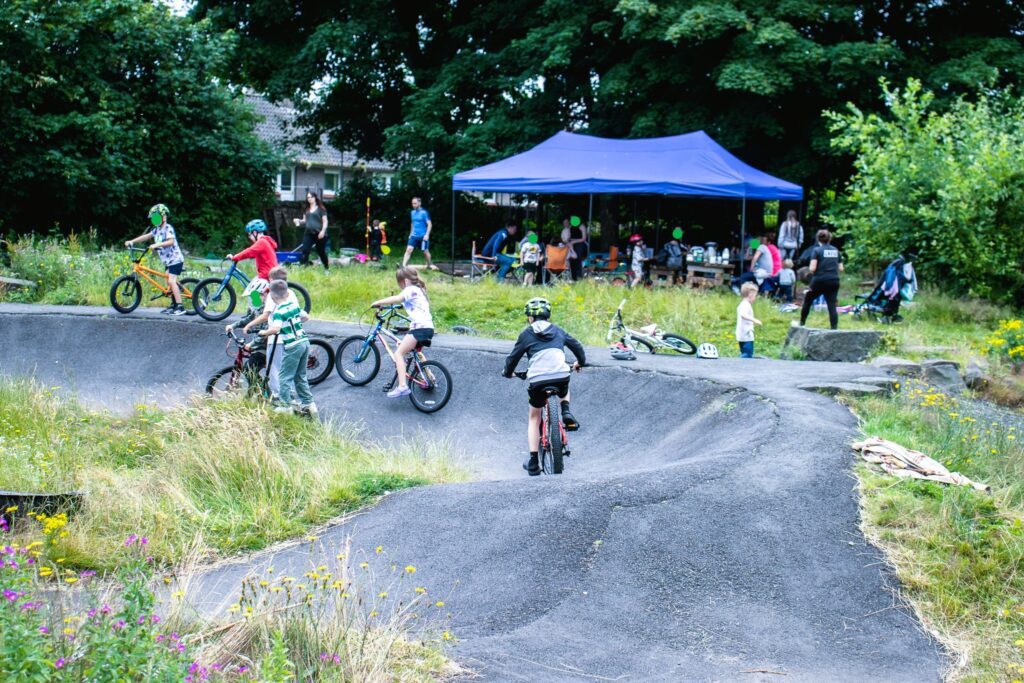
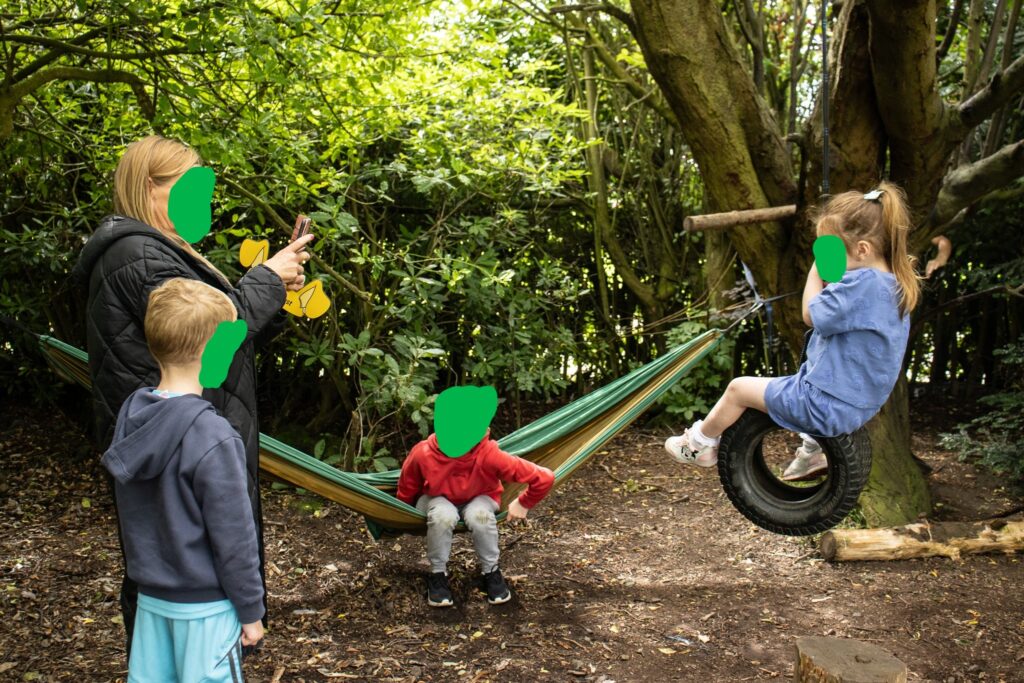
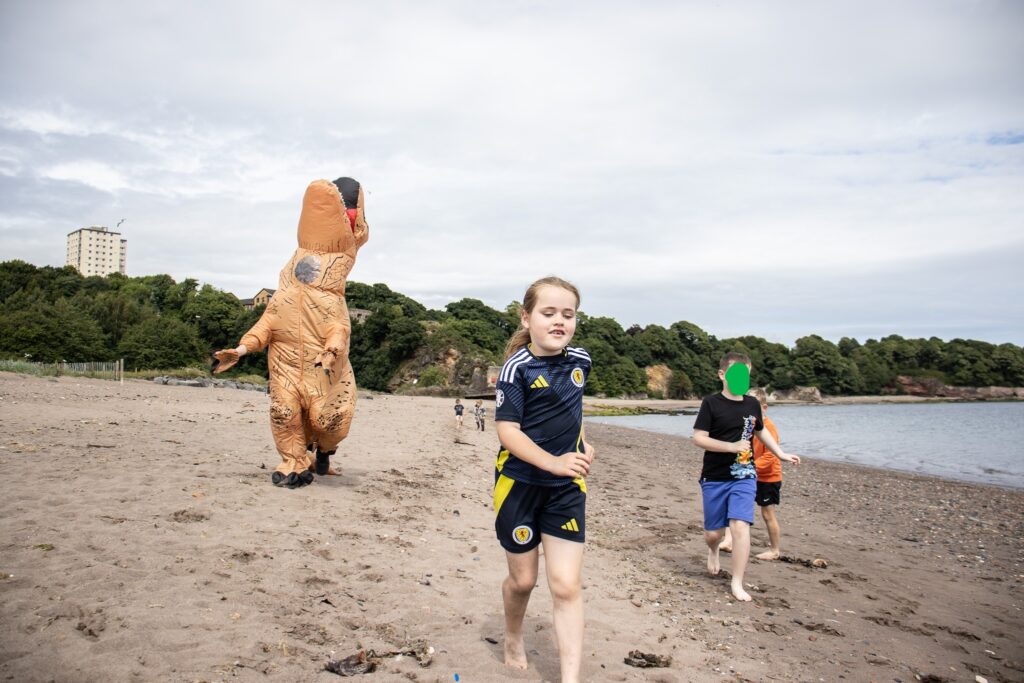

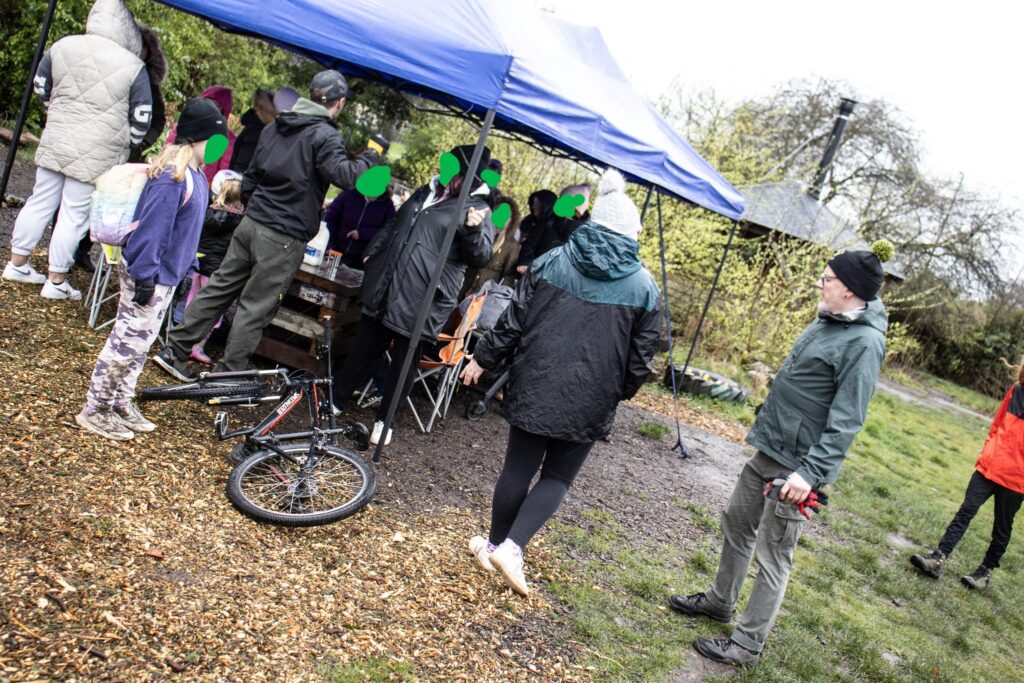
The photos tell the most important part of the journey – joyful children spending time outdoors. Never has it been more important than now, and the timing of my opportunity was a gift for many reasons. I’d like to open myself to questions and make some helpful suggestions if anyone is interested.
My time working with the community is now part of my community ethos and political perspectives. I was hired by Kirkcaldy YMCA after volunteering for two years. I no longer work for the YM – after handing in my notice when staff numbers made the project unsustainable.
Looseparts
These photos don’t do my team’s loose-parts play justice, but I chose them to highlight something unique to our Wild Space and the amazing role I had personally. I’ve had an experience that hasn’t matched anyone I’ve found in the third sector and I feel there’s a lot to be learned from it.
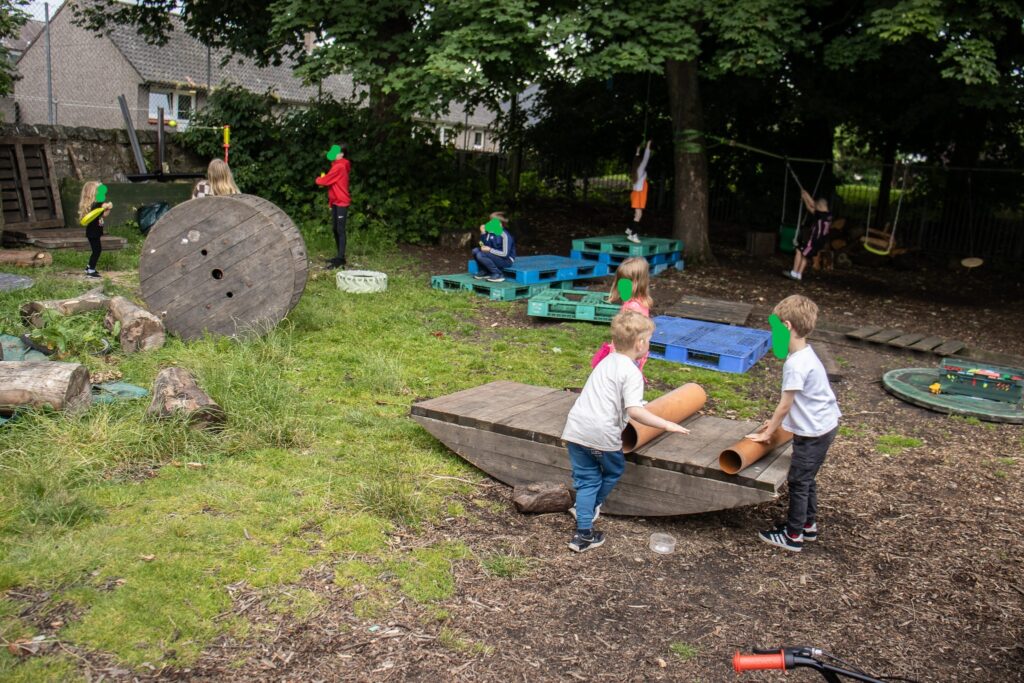
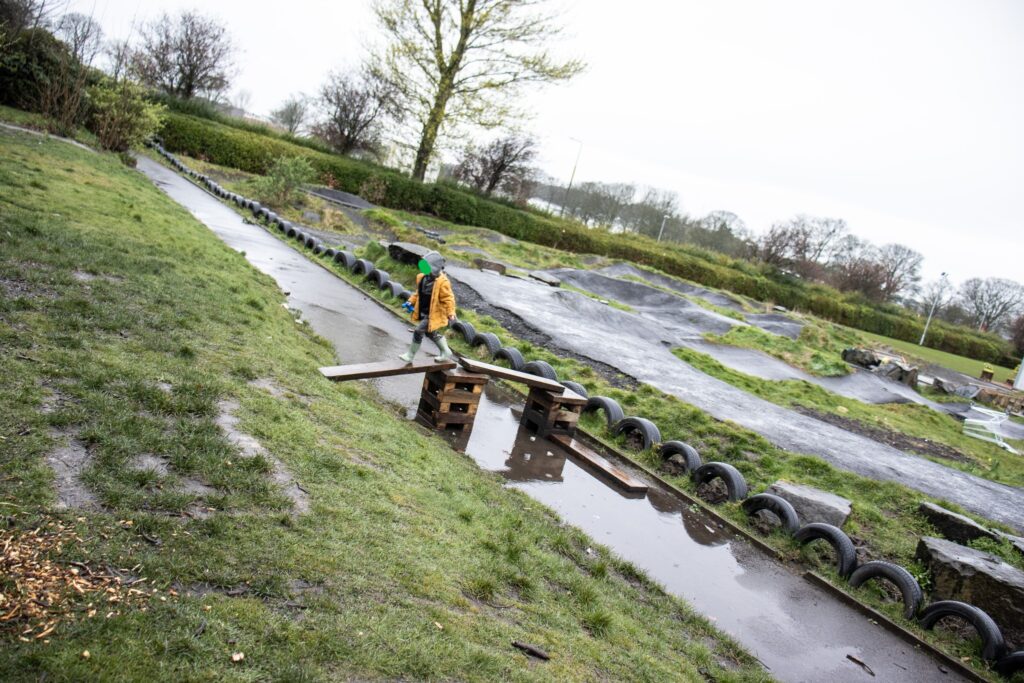
The image on the left shows a rocking platform that I built with someone while running woodwork sessions for the community. That group was funded by Fife Voluntary Action to tackle social isolation. The person who built it with me greatly benefited from the opportunity to do something for the community, and a couple of hundred people have probably played on it so far – including parents!
It gets even more interesting when we provide loose parts and see the kids coming up with games that don’t always involve standing on the platform. I’ve watched many fall off – no injuries that I know about. The point is that loose parts offer an opportunity for the imagination to lead the way, especially when we provide these larger items. I’m very fortunate that I could merge different roles into one objective – having fun!
The photo on the right also includes things we built – two seats of different heights. There are another two and a table to match (not in the photo). They were built using old fence posts and scaffolding boards – you can imagine how durable they are. I have a video of two nine-year-olds using Makita Impact Drivers to screw them together – yes, kids built those using power tools during my woodwork sessions!
Reflection
Anyone familiar with loose-parts play might agree that this is an entirely different mix of elements. It required the right knowledge and tools to get to this stage. It’s an ideal situation that allows loose parts to be created on-site. I highly recommend a lot of advice before attempting to establish a similar setup – ask me. I will finish by stating that the entire process requires a lot of patience and a readiness to adapt to other people very quickly.
Slacklines
Slacklines are one of the most versatile pieces of kit a Playranger (or potentially a teacher or youth-worker) can add to their toolkit. They’re cost-effective, especially because they’re highly durable, and can be adapted to suit different age groups. They can also be added to loose-parts play.
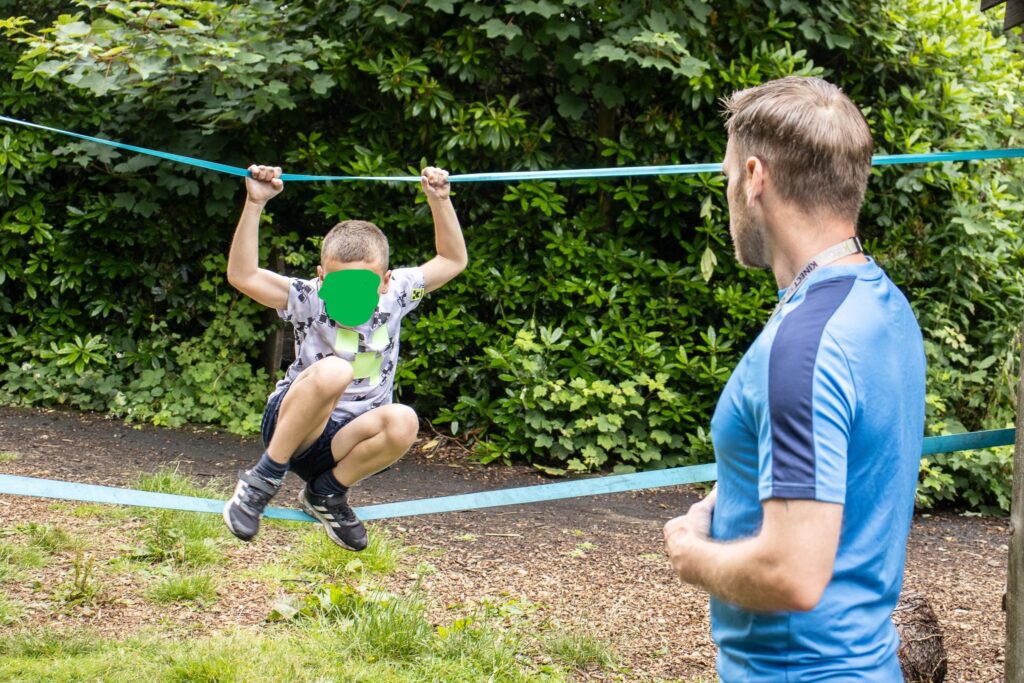
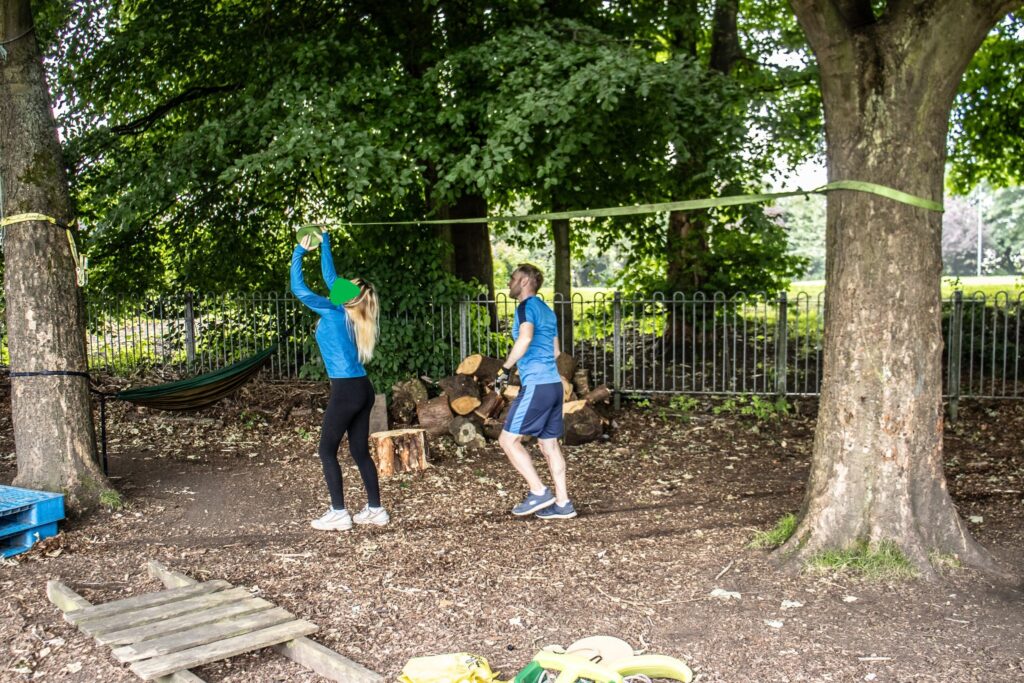
The blue slackline (buy here) in the image on the left was actually attached to a swing-set and a shelter – a first for our Wild Space. I watched carefully while an experienced user tested the line to ensure the new setup was safe enough. Risky play is never far from my mind when planning a session!
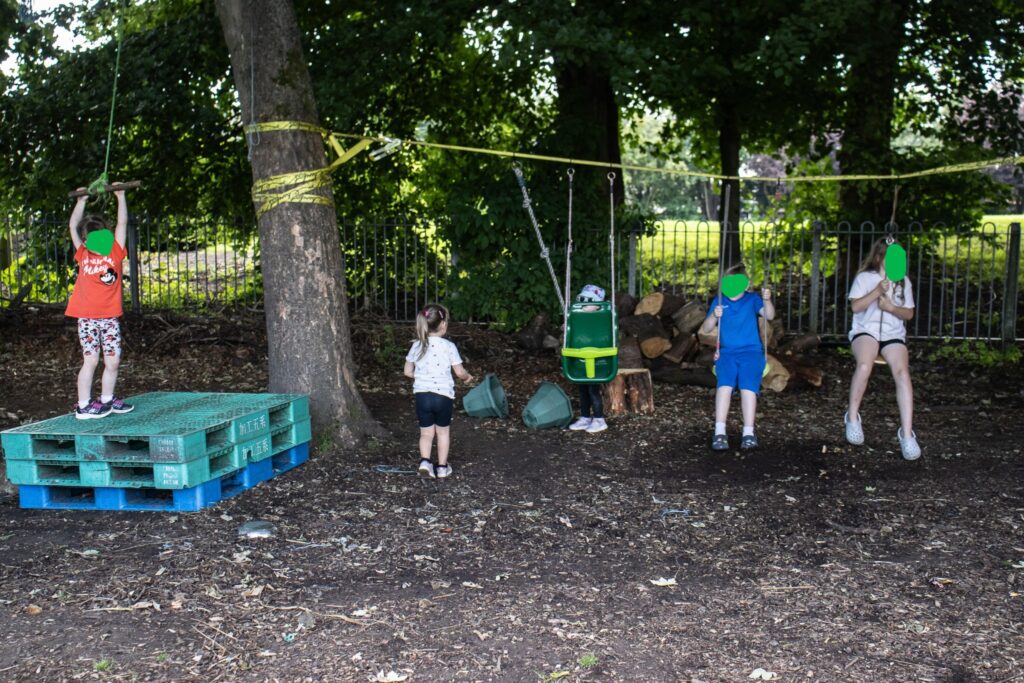
The yellow slackline (buy here) in the centre image was another first for me and involved a high setup for attaching swings to. This was done regularly to keep the younger children busy. You can see from the image that the entire setup is actually keeping a mixed age group busy. Notice the baby seat with nobody in it – I once encouraged an upset child to put their doll in the seat and push. That worked!
The line has to be ratcheted very tight in that setup because it will loosen. I don’t recommend it as an early setup because of the awkwardness of height and the risk of error leading to the line collapsing. Should that happen with people standing on the line it’s far less likely to cause serious injury than kids swinging – setup with confidence. Specifically ensuring the ratchet is properly closed – wrapping the wratching lever to prevent tampering (it won’t open and release the line) is recommended in all approaches.
I once set up the attachments (another great investment) on the goalposts in our local park and then expressed my pride at trying to do something different at every session, haha! Offering something different in each session was a personal goal that I felt was important to keep sessions interesting for frequent visitors.
The third image is pre-session. In that I’m teaching a teenager (helping out) to prepare a green slackline (buy here), she managed it well. A reminder that the kit isn’t beyond most people’s ability, but that doesn’t mean there isn’t potential for mistakes. Taking a slackline down also requires a specific action; it can sometimes feel impossible without the right approach and understanding of the ratchet. Get to know the kit before including it for use with the public.
Other Uses for Slacklines
Zones/Signposting: My reason for multiple colours of slackline in our kit is for team-based sessions and zoning i.e. in the woods, I would circle an activity with a high line. The kids couldn’t play on it (a distraction or even risk near an activity or fire), but could see it from a distance, and this made it easier to direct them where to go.
Shelter Ridgeline: Throw a tarp over a high line and anchor the tarp to the ground to create a quick shelter. I’ve done it with two tarps on one line, and about 20 people were under it in a downpour while I sat on the outside providing hot drinks using the Kelly Kettle. To make it worse, I didn’t get a hot drink myself in the end, haha!
Across Streams/Drops: My team once set up lines across a stream. I still tense up when I see the photos and wonder where our senses went that day because it was the riskiest thing we’ve ever done. Admittedly, mostly my idea…or entirely was! I will never use that approach again without helmets and a harness, which is clipped onto the line. I will say, however. In the years I’ve used these, not a single child fell off!
The Digging Pit & Mud Kitchen
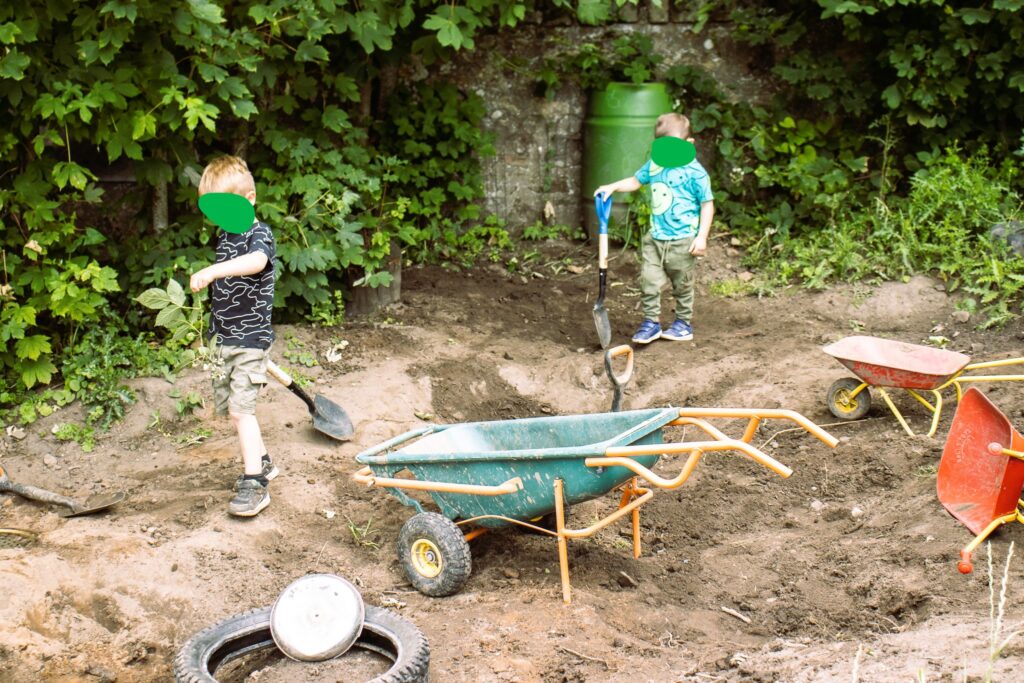
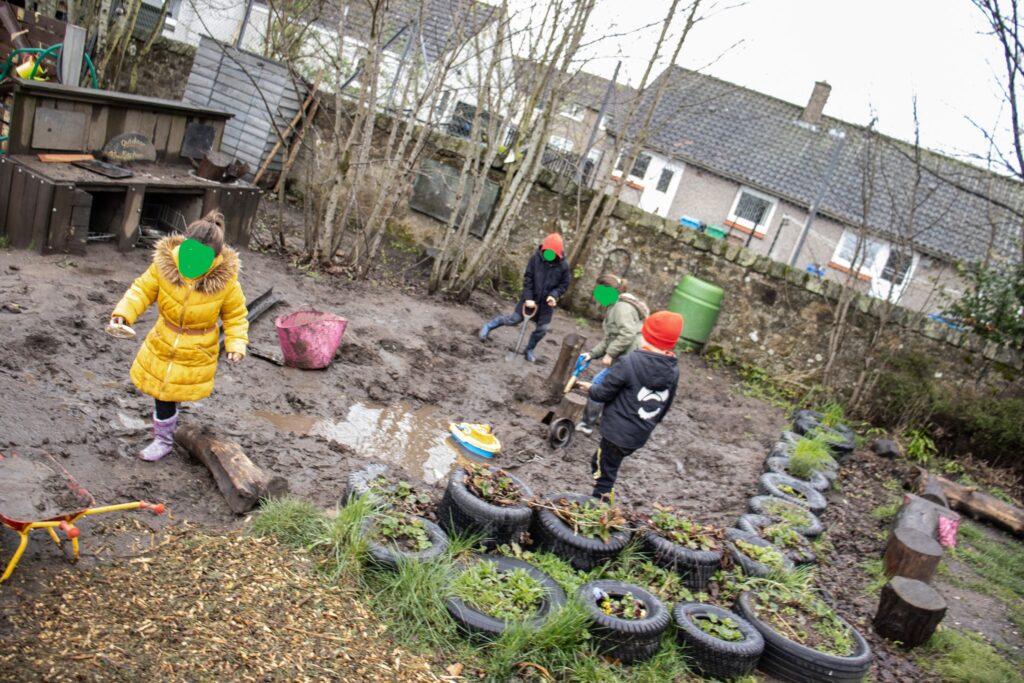
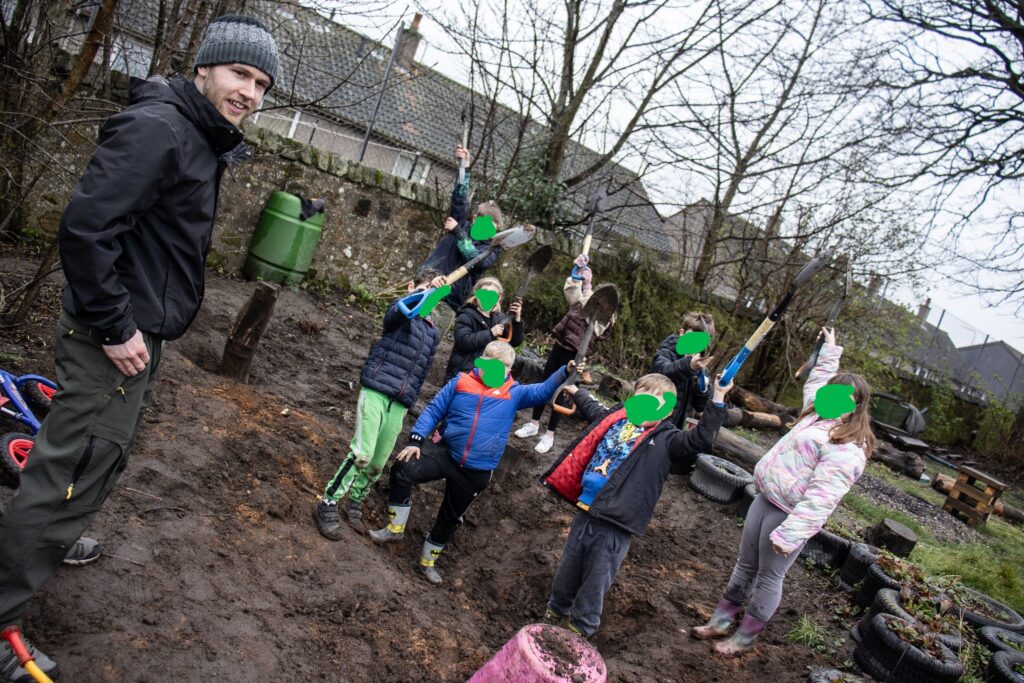
I may not need to say much about mud – anyone who works with kids in the outdoors knows they love it, and when grown-ups are pulled into the pit, they discover the child in them. Add a mud kitchen like the one I guided a group to build, and a whole other type of play is offered. As you can see, our mud kitchen was used as a boundary on one side of the pit (else it would expand at an outrageous rate haha!) and we used tyres (bolted together) to border the other side.

Fires & Outdoor Cooking
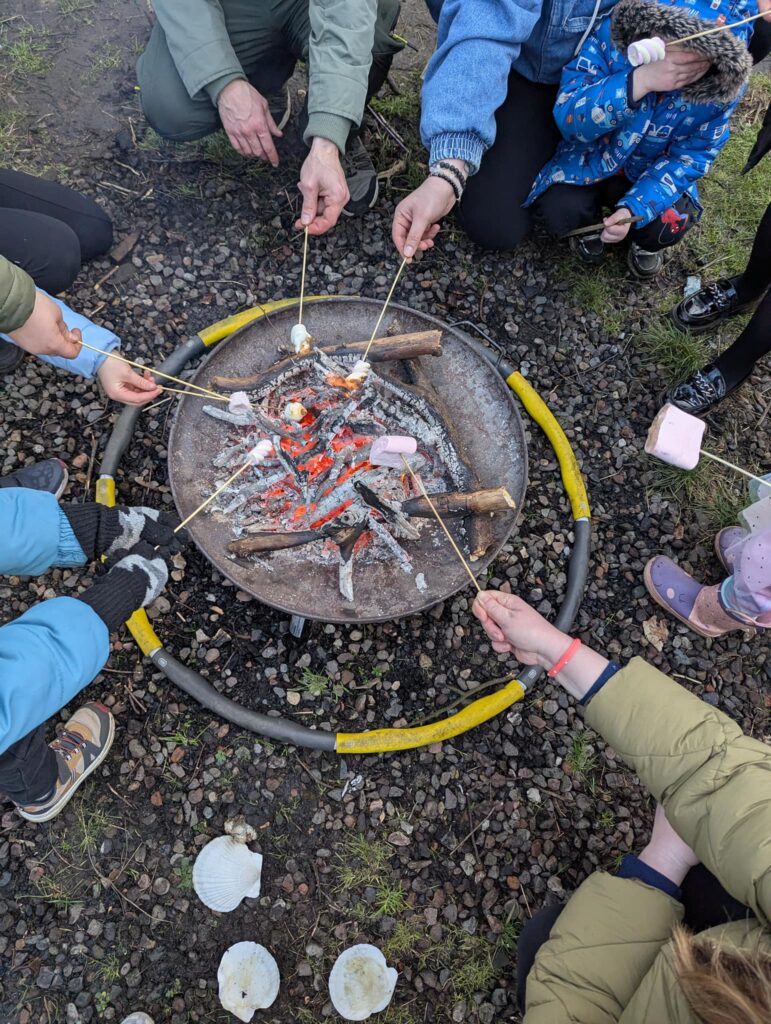
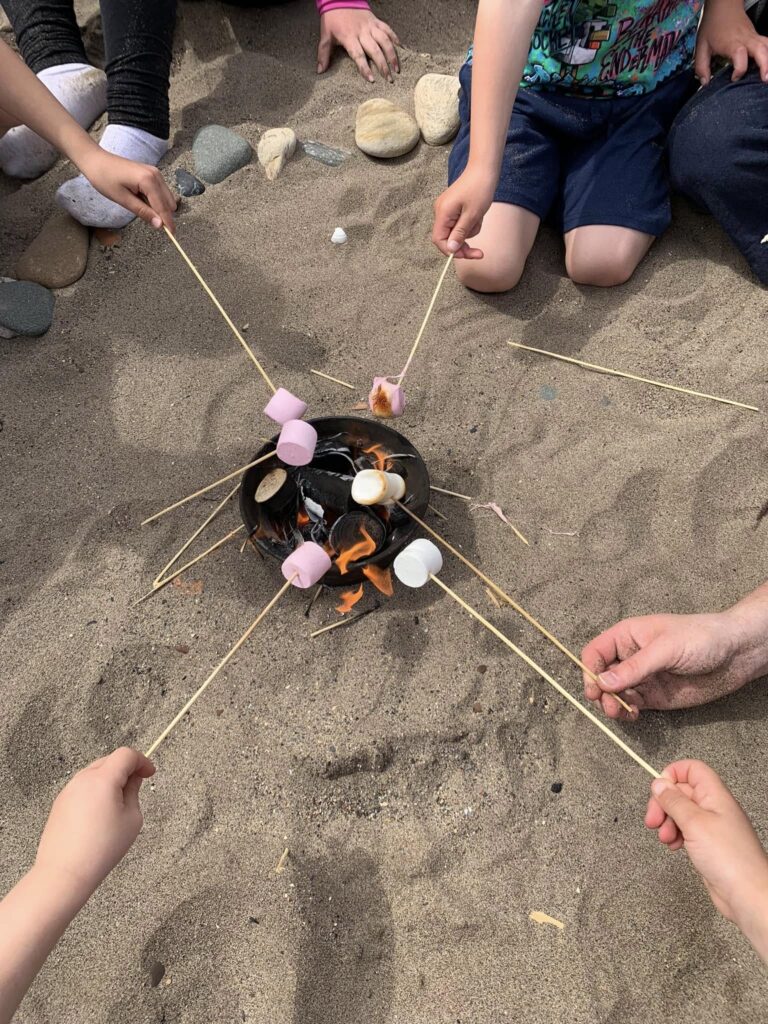
The need for training on this subject can’t be stressed enough. I can talk for hours on this subject. I’ve never had an incident that required the use of first aid. Attentive supervision and strict rules are needed to be able to say that. The skill is delivering it all while also making a calm atmosphere that feels joyful.
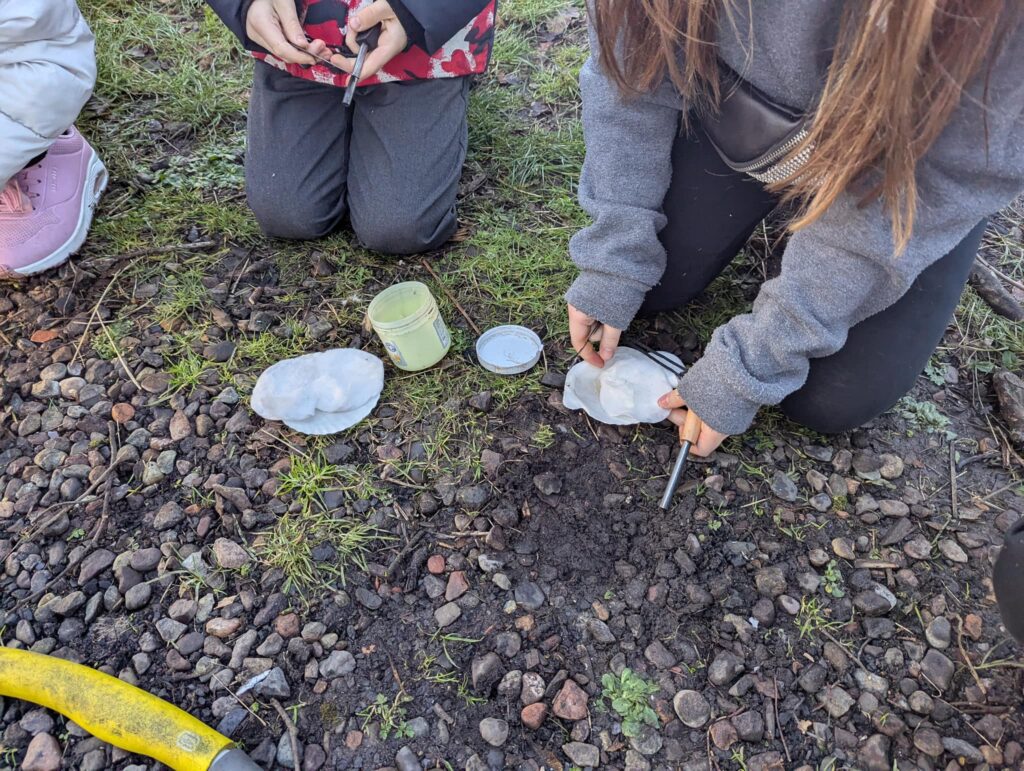
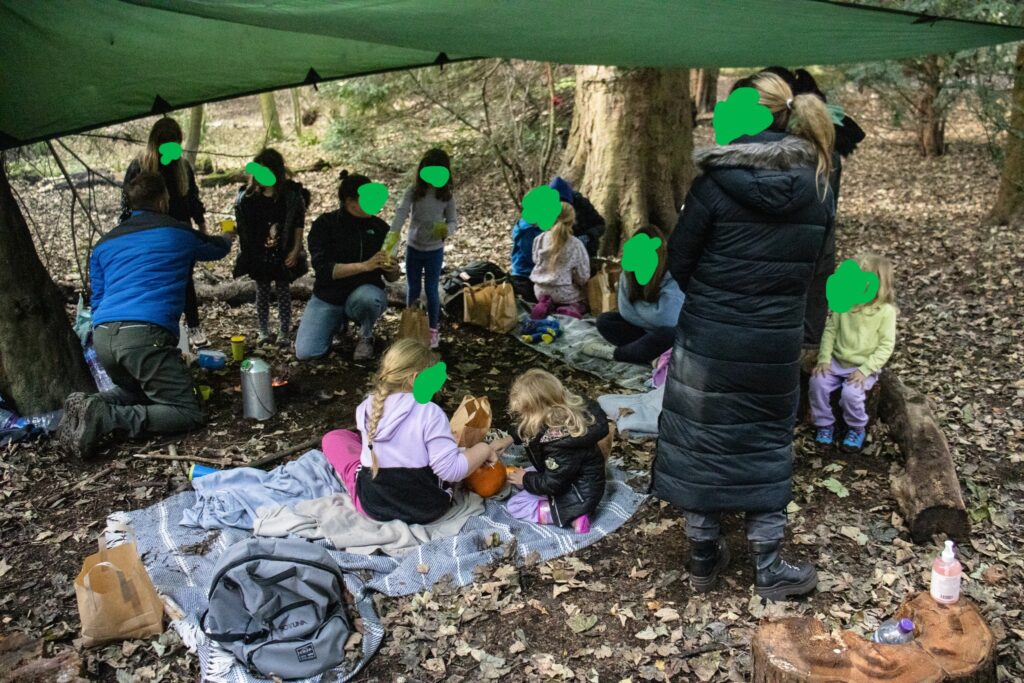
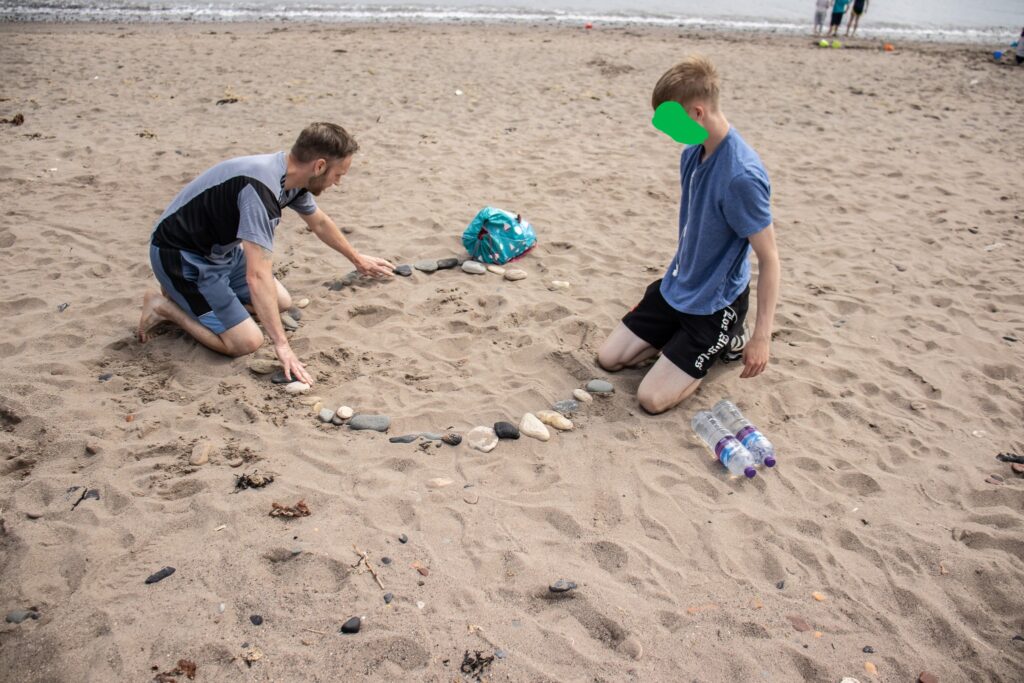
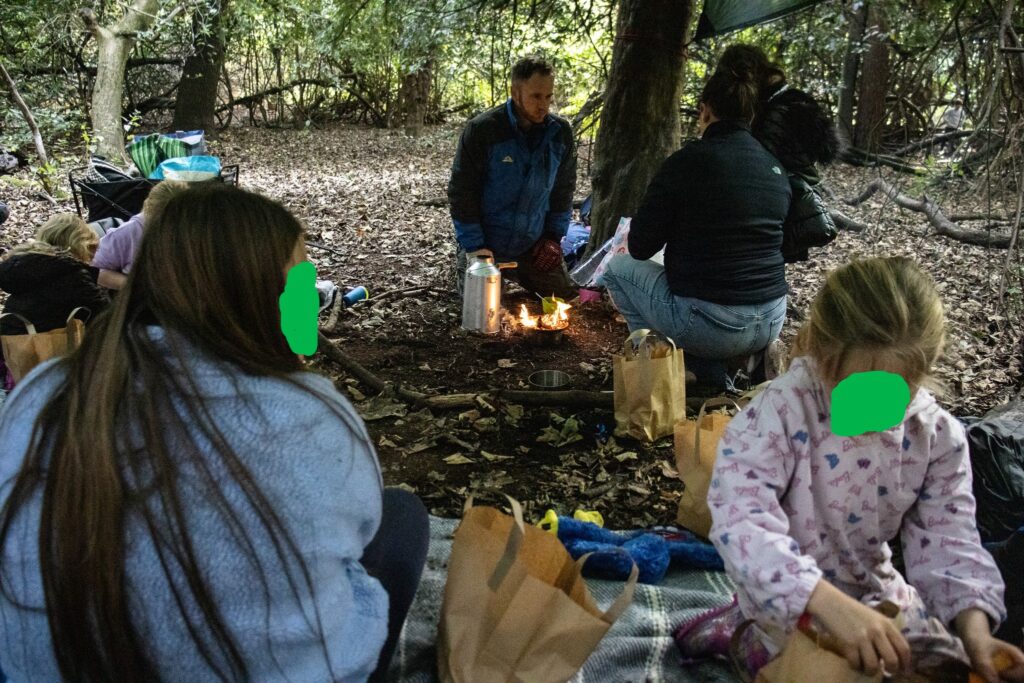
Starting Fires: The photos include children practising with flint & steel (firestarters/firelighters) – this is how we start our fires. My colleagues and I have always offered the opportunity to use these. The joy of watching a child persevere for the entire session and finally make fire is rewarding, but success requires a good teacher who is confident in guiding young people. Like with everything I do, I explored different approaches and now have two favourite “sparkers” that I always offer together. First is a bright orange one that’s great for spotting when dropped in woodland or on a dark evening – you can buy that here on Amazon. I found that some children struggle with that one due to the short steel part. The way it’s meant to be held doesn’t suit some kids. Other kids excel with it, probably because they have good dexterity. The other design is easier for the younger kids to hold and doesn’t need as much control – you can find it here.
Kelly Kettle: Two photos include a Kelly Kettle. It seems like a simple piece of kit, but I’ve watched people make mistakes and heard my name being called when it’s not going quite right. Usually, my approach is to guide staff to success so that they can recover their confidence. However, the Kelly Kettle is often used in the winter to offer hot drinks, so when it’s going wrong…the pressures on haha! Do not underestimate any kit when offering fire and any form of outdoor cooking. At least get good advice and practice yourself before attempting to do it with an audience. Here is a link to the basic Kelly Kettle kit for hot drinks – a more expensive kit is available for outdoor cooking, but it’s not a suitable approach to cooking food for groups.
Get Training: I have over 50 hours of experience leading and supporting different forms of fire and outdoor cooking. Managing a fire with children is a serious activity that requires hours of training and practice. It can be the focus point of a session on a cold winter’s day, and the warmth will create happy faces. One of the best sessions I’ve had involved a brilliant Playranger who read the Gruffalo – standing up in the dark, with the light of the fire illuminating her, and passionately reading to huddled families. It was a moment that could only be as good as it was because it was a dark winter evening, with a safe fire that had clear boundaries, strict rules, which were established in a calm manner.
Summary
I’ve grown massively from my experiences when working with the community. I was trained and learned as I went. It was a very dynamic and highly demanding experience that required me to adapt frequently. That can be exciting and drive passion.
Passion is key!
Much of what I’ve done applies to Forest Kindergarten and Outdoor Nursery settings. However, each setting changes the dynamics and the challenges, so advice that takes your intentions/role into consideration is vital. Obviously, child practitioners are qualified and outdoor practitioners are likely to have additional qualifications to get their roles. That does not mean someone is ready to offer risky play and fire to groups of 16 children, in my opinion. I would recommend gaining experience with smaller groups and different weather conditions before trying to support a full nursery group or an open community session.
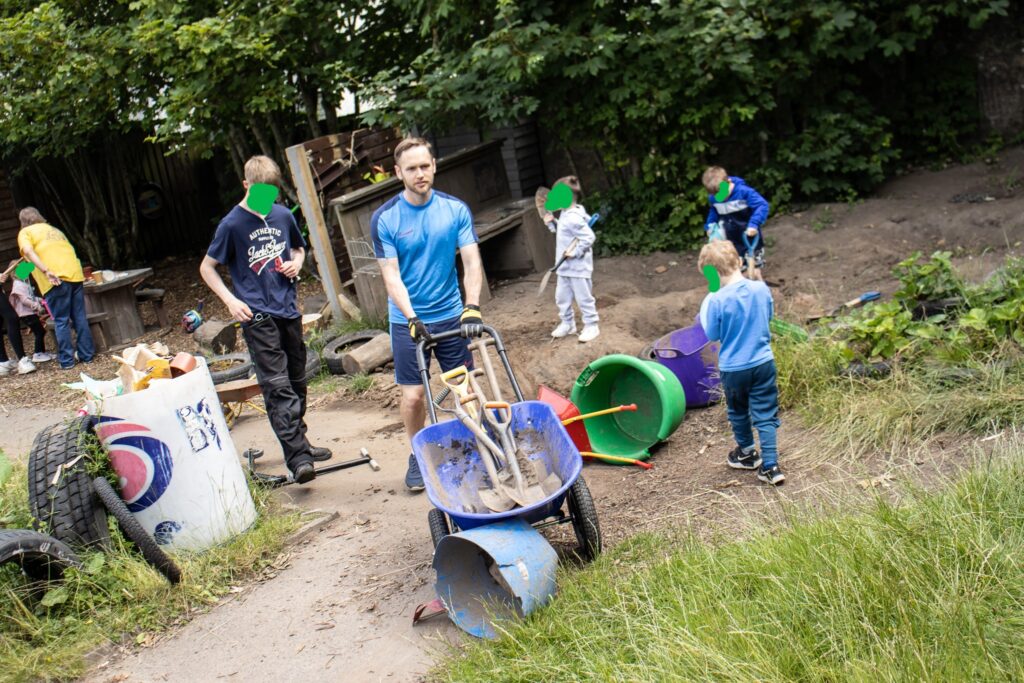
Lastly, I want to express the importance of a male role model in these settings and supporting men to make this work. Nursery teams are still female-dominated, while primary Schools have more male teachers than when I was a child – there has been some progress at least. I believe that outdoor nurseries would eventually benefit from a culture that creates more roles, such as Playrangers, and treats these roles as a step towards a career – this would require an official pathway to be developed. My reason for this is the need for trust to be built in the current climate of constant news about dangerous men, and just recently a male nursery worker who abused many children. These are sickening events that naturally cause a lot of anxiety for parents. This is why a different approach is needed that would allow transparency and reassurances. I find it a sad situation. Especially because I strongly believe that many children will make more progress in certain areas with an attentive male, and boys with ASD can make critical development breakthroughs faster. The current tide of constant news about dangerous men makes it vital that we balance teams and find male role models we can trust. It is vital that when individuals like myself have been given all this experience, society allows them to take the next step. It will make a massive difference to many children and potentially even households struggling with children with ASD.
